

Abortion In Oklahoma
What Does The Law Say About Abortion in Oklahoma?
In most circumstances, abortion cannot legally be provided in Oklahoma. Oklahoma's pre-Roe criminal abortion statute became enforceable again after Roe was overturned. Under current state law, an abortion may be provided when a physician determines that continuing the pregnancy will endanger the pregnant person's life. Oklahoma's primary criminal abortion ban does not include exceptions for pregnancies resulting from rape, incest, or for fatal fetal diagnoses.
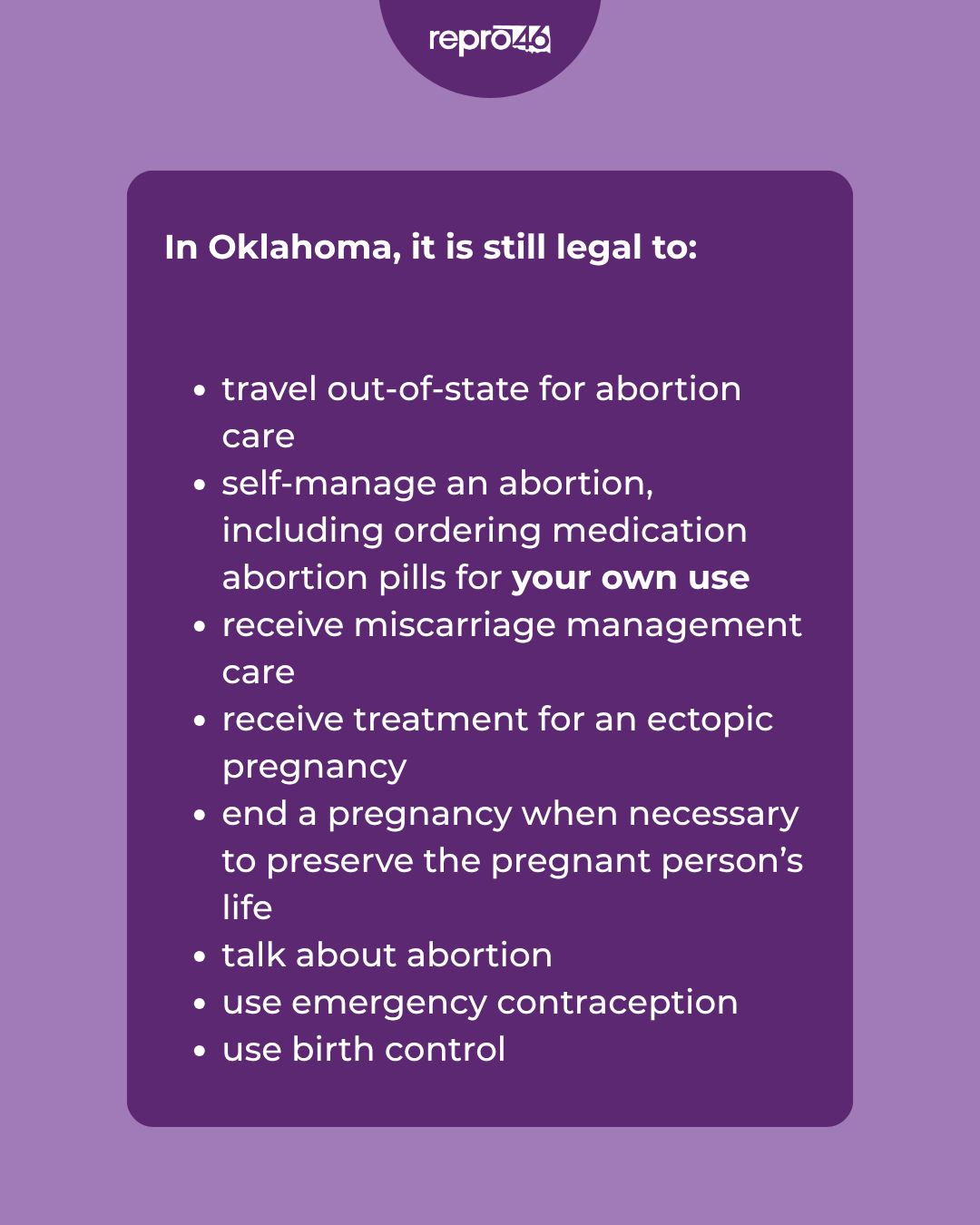
What Is Still Legal in Oklahoma?
Traveling out-of-state for abortion care is legal. Miscarriage care is legal. Ectopic pregnancy treatment is legal. Birth control and emergency contraception remain legal. A pregnant person is not currently criminalized under Oklahoma law for ending their own pregnancy, although distributing abortion medication to others with intent to cause an abortion is illegal.
HB1168 Is Now Law.
In 2026, Oklahoma lawmakers passed House Bill 1168, legislation creating a new ‘trafficking’ felony offense related to abortion-inducing medications. Gov. Stitt signed the bill on May 5, 2026, and the law is now in effect. HB 1168 makes it a felony when someone knows or has reason to know that another person intends to use an abortion-inducing drug for an unlawful abortion and that person knowingly or intentionally:
delivers the abortion-inducing medication to that person; or
possesses the medication with the intent to deliver it to that person.
A conviction for trafficking or attempting to traffic abortion-inducing drugs can carry up to 10 years in prison, a fine of up to $100,000, or both.
The law's definition of an "abortion-inducing drug" includes medications prescribed or dispensed specifically with the intent of causing an abortion. The statute specifically references medications such as misoprostol and methotrexate, and state lawmakers have described the law as applying to medications including mifepristone as well.